Focaccia
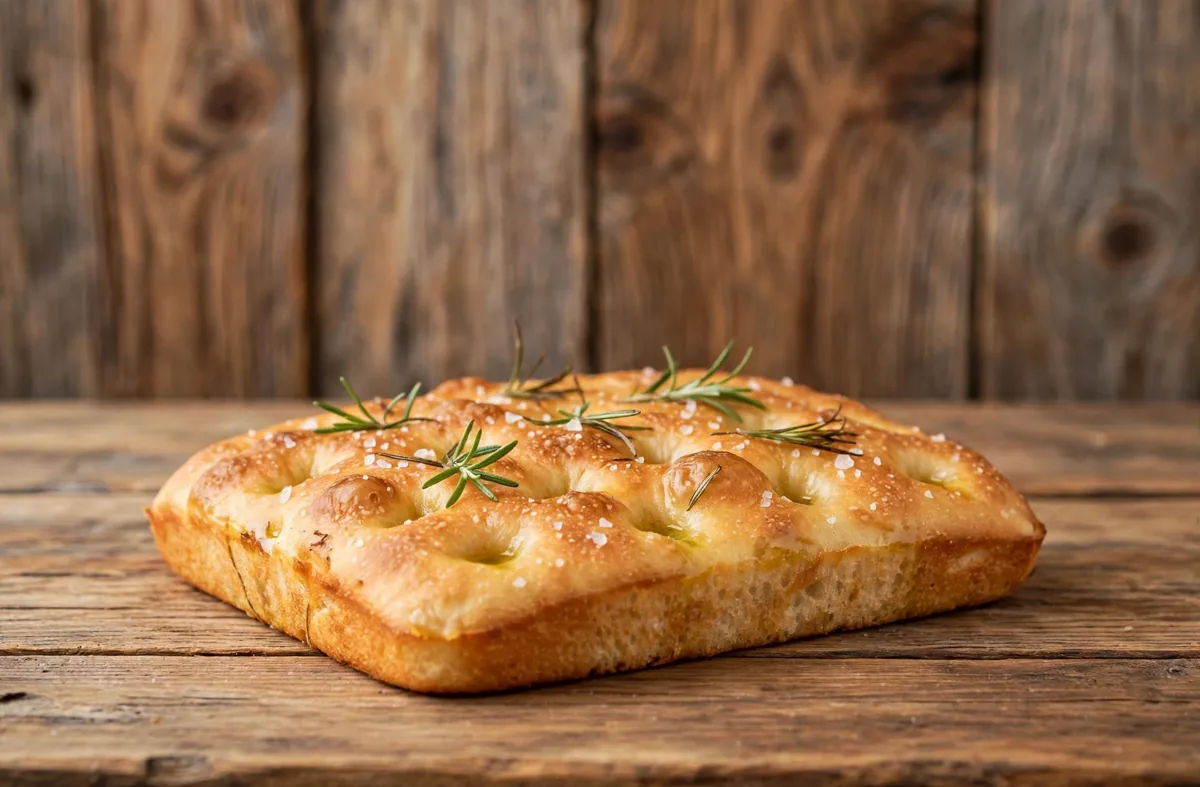
What is focaccia?
Focaccia is an Italian oven-baked flatbread with a golden, crisp-bottomed crust, a soft, airy interior and a surface pressed into dimples and saturated with olive oil and coarse salt. It is typically made in a rectangular or square pan, about two to three centimeters thick, and it is often scented with rosemary, though sage, olives and onions are also traditional.
It is one of the world's oldest and simplest breads, made from the same ingredients as pizza dough, and it is eaten in many ways: as a snack with nothing on it, as a side with a meal, split for sandwiches or, in Genoa, at breakfast. The most familiar style is the Ligurian focaccia genovese, but Italy has dozens of regional versions, and some bear almost no resemblance to the thick dimpled loaf that many people know.
History of focaccia
From the Roman hearth
The word comes from the Latin focus, meaning "hearth" or "place for baking." In ancient Rome, a flatbread called panis focacius was baked on the hearth, and focaccia is its descendant. Some people trace the basic recipe back even further, to the Etruscans, though that link is a theory and not a documented fact.
The word and the Ligurian tradition
The Italian word focaccia is first written down around 1300, according to the linguist Fiorenzo Toso, and other sources place it in the fourteenth century. Over the following centuries the flatbread spread through Italy and took on local forms. It became most strongly associated with Liguria, the coastal region around Genoa, where it is called fügassa in the local dialect. Along that coast, small towns and villages developed countless variations, from the hard, dry focaccia of Camogli to the soft, oily, corn-flour focaccia of Voltri.
Elsewhere in Italy the name covers very different breads. In Bari it is fecàzze, made partly with durum wheat and topped with tomatoes and often olives, and in the Veneto a sweet focaccia is typical for Easter. In the far northwest, across the French border, a related bread appears as the fougasse.
Recco and its protected cheese focaccia
The town of Recco, near Genoa, is home to the most unusual variety of all: focaccia di Recco col formaggio, which has no yeast and consists of two paper-thin layers of dough around soft cheese. The earliest versions used local cheeses, and these were later replaced by stracchino or crescenza from Lombardy. The town has held a festival for it since 1955. In January 2015, the European Commission entered the name in its register of protected geographical indications, over objections from the United Kingdom and Portugal. As a result, the name can be used only for focaccia made in Recco, Avegno, Sori and Camogli.
Timeline: key dates
- Ancient Rome: Panis focacius, a flatbread baked on the hearth (focus), is known. Some people trace the recipe back to the Etruscans, though this is unproven.
- Around 1300: The Italian word focaccia is first written down, according to the linguist Fiorenzo Toso.
- Medieval and early modern centuries: Focaccia develops countless regional forms along the Ligurian coast and across Italy.
- 1955: Recco begins its annual festival devoted to its cheese focaccia.
- 13 January 2015: The European Commission registers focaccia di Recco col formaggio as a protected geographical indication.
- 3 February 2015: The protection takes effect.
Ingredients
Focaccia is made from a few ingredients, and the generous amount of olive oil is its signature.
- Wheat flour: a strong bread flour with high protein, which gives structure to a wet dough.
- Water: a high proportion, which makes the dough soft and the crumb open. Focaccia dough is wetter than standard bread dough.
- Yeast: instant or fresh, in a small amount, so a slow rise can build flavor.
- Salt: about 2 percent of the flour weight inside the dough, plus coarse salt on top.
- Extra-virgin olive oil: in the dough, in the pan, and on top. It gives the crisp base and rich flavor.
- Toppings: rosemary is the most common herb, but sage is also traditional, along with olives, onions, cherry tomatoes and, in some places, cheese.
A typical recipe for one large pan uses about 500 g flour, 375 g water, 10 g salt, 3 g instant yeast and about 60 ml olive oil in the dough and pan, plus more for the surface.
How focaccia is made
- Mix the dough. Combine the flour, water, yeast, salt and a little oil into a sticky dough. It needs little kneading: a few stretch-and-folds during the first rise are enough.
- First rise. Let the dough rise until doubled, about 1 to 2 hours at room temperature, or overnight in the refrigerator for more flavor.
- Oil the pan. Pour a generous amount of olive oil into a baking pan, which helps fry the base into a crisp, golden crust.
- Stretch and rest. Gently stretch the dough to fill the pan. If it springs back, let it rest for 15 minutes and try again.
- Dimple. Press your fingertips firmly all the way down into the dough to make deep hollows.
- Add the brine. In the Genoese style, brush or pour a mixture of olive oil, coarse salt and a little water over the surface before the final rise, so it pools in the dimples.
- Final rise. Let the dough rise again for 30 to 60 minutes until it is puffy. This second rise after shaping is what distinguishes focaccia from pizza.
- Top and bake. Add rosemary or other toppings and bake in a hot oven, about 220°C (425°F), for 20 to 25 minutes, until the top is golden and the base is crisp. Finish with a drizzle of oil and flaky salt while it is still warm.
What a great focaccia looks like
- Top: golden, glossy with oil, with evenly spaced dimples and flakes of salt.
- Base: crisp and golden, almost fried, from the oil in the pan.
- Crumb: soft, light and open, with irregular holes, and moist rather than dry or bready.
- Height: tall and pillowy for a Genoese style, but never doughy.
- Flavor: fruity from the olive oil, with clear salt and the scent of rosemary.
Variations
- Focaccia genovese: the classic Ligurian style, with finger-sized dimples and a brine of oil, salt and water. In Genoa it is eaten at breakfast, often dipped in milk or cappuccino.
- Focaccia di Recco col formaggio: unleavened, paper-thin and filled with cheese, protected by the EU.
- Focaccia di Voltri: a soft, oily Ligurian version made with some corn flour.
- Focaccia di Camogli: a hard, dry, biscuit-like focaccia.
- Focaccia barese: from Bari, made partly with durum wheat and topped with tomatoes, often with olives. A potato version is also common.
- Focaccia alla messinese: the typical focaccia of Messina in Sicily.
- Focaccia veneta: a sweet Easter focaccia from the Veneto, made with eggs, sugar and butter, similar to panettone and pandoro.
- Focaccia dolce: sweet focaccia from northwest Italy, lightly sprinkled with sugar and sometimes with raisins or honey.
- Potato and rosemary focaccia: a Tuscan variation, sometimes called "potato pizza" in New York.
Common problems and fixes
- Dense, bready crumb: the dough was too dry or underproofed. Use more water and give it time to rise.
- Pale top: the oven was too cool. Bake hot and finish under the top heat for a minute if needed.
- Greasy, heavy result: too much oil pooled in the pan or on top. Use generously, but not so much that the dough is swimming.
- Dough shrinks back when stretched: the gluten is tight. Rest it for 15 minutes and stretch again.
- Large bubbles lifting the top: the dough was not dimpled firmly enough. Press all the way down.
- Soggy base: the pan was not oiled enough or the oven was not hot enough.
Serving and storing
Serve focaccia warm, torn into pieces, as a starter with olive oil or balsamic vinegar, alongside soup or salad, or split horizontally for sandwiches with cured meats, cheese or roasted vegetables. In Genoa it is a traditional breakfast. Keep it uncovered or loosely wrapped for a day, then refresh in a hot oven for a few minutes. For longer storage, cut it into portions and freeze for up to a month.
Nutrition snapshot
According to the USDA, plain focaccia provides about 249 calories per 100 g, with roughly 9 g of protein, 8 g of fat and 36 g of carbohydrate, so a 57 g piece is about 142 calories. Store-bought and restaurant versions vary from about 240 to 280 calories per 100 g, and olive-rich or heavily oiled focaccia can be higher. It also tends to be salty.
Frequently asked questions
What is the difference between focaccia and pizza?
The dough is similar, but focaccia is left to rise after it has been flattened and is baked only when it has finished rising, while pizza goes into the oven right away. Focaccia is also usually thicker, most often square or rectangular, and generously seasoned with olive oil and salt.
Why does focaccia have dimples?
Pressing the dough with fingertips before baking stops large bubbles from lifting the surface, and the hollows collect olive oil, salt and sometimes water, so each dimple turns crisp and savory while the dough around it stays soft.
Is focaccia from Genoa?
The flatbread itself is much older: in ancient Rome, a hearth-baked flatbread called panis focacius was already known. Today focaccia is most closely associated with Liguria, and outside Italy the word usually refers to the Genoese version.
What is focaccia di Recco?
It is a very different dish from the thick, dimpled loaf: two paper-thin layers of unleavened dough sandwiching soft cheese such as stracchino or crescenza. Focaccia di Recco col formaggio is a European Union protected geographical indication and may only be made in Recco, Avegno, Sori and Camogli.
How should I store focaccia?
It is best on the day it is baked. Keep leftovers in a paper bag or wrapped loosely for a day, then refresh in a hot oven. Cut it into pieces and freeze for up to a month.
Related pages
Sources
- Wikipedia, Focaccia
- Fiorenzo Toso, Piccolo dizionario etimologico ligure (2015)
- Sergio Rossi, Focaccia genovese (2013)
- Commission Implementing Regulation (EU) 2015/39 entering Focaccia di Recco col formaggio in the register of protected geographical indications (2015)
- Il Fatto Alimentare, La Focaccia di Recco ottiene l'Igp
- Efanews, Focaccia al formaggio di Recco IGP: che la festa cominci!
- USDA FoodData Central: Focaccia, Italian flatbread, plain