Macaron
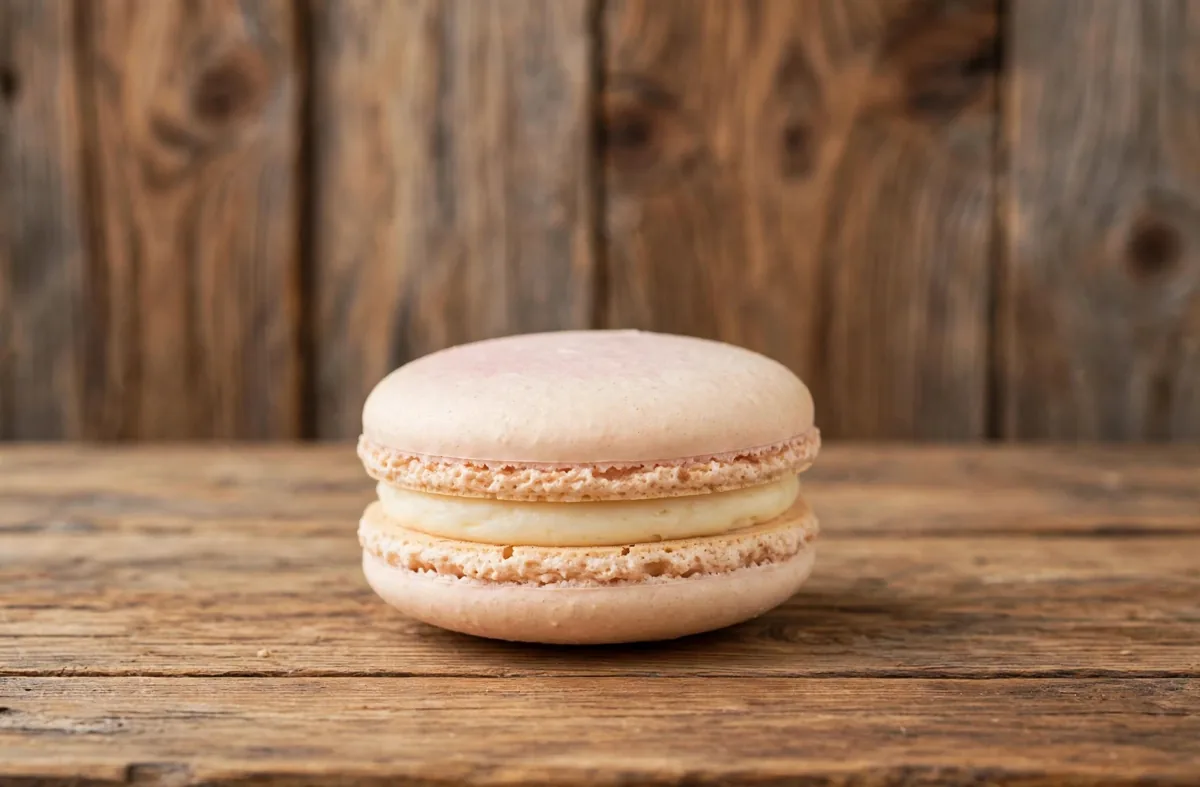
What is a macaron?
A macaron is a small, round, delicate sandwich cookie made from two almond-meringue shells joined by a filling of ganache, buttercream or jam. Its surface is smooth and slightly glossy, the edges are ringed by a ruffled "foot," and the inside is chewy, so that each bite is crisp at the shell and soft in the center. It is among the most photographed pastries in the world, partly because the shells can be tinted in almost any color.
It is also notoriously difficult to bake. Weather, oven temperature, the age of the egg whites and the way the batter is folded can all decide whether a batch comes out perfect or cracked and flat. In English, the cookie is sometimes called a "French macaroon," but it should not be confused with the coconut macaroon, which is a different cookie.
History of the macaron
An Italian word and an old idea
The word macaron comes from the Italian maccherone, the same root that gives us macaroni, and both originally meant a "fine paste" or dough. Early macarons were simple biscuits made from ground almonds, sugar and egg white, much like the Italian amaretti. Food historians note that almond pastries often trace back to the Arab world and traveled through Spain and Italy before reaching France, so the macaron's real ancestry is gradual and layered, with no single moment of invention.
The Catherine de' Medici legend
The best-known story says that the macaron came to France in 1533 with the chefs of Catherine de' Medici, when she married the future King Henry II. It is repeated in countless guides, but it does not hold up: a search of the records of the people who worked in her household during her time in France found no Italian chefs, and the food historian Marie Josèphe Moncorgé calls it simply a legend.
Regional macarons
By the seventeenth and eighteenth centuries, French towns had developed their own almond-biscuit traditions, and many claim long histories, although these accounts are hard to verify. Saint-Émilion's recipe is traditionally linked to the Ursuline nuns, around 1620, and Saint-Jean-de-Luz says macarons were served at Louis XIV's wedding in 1660. Larousse Gastronomique cites a macaron created in 1791 in a convent near Cormery. In Nancy, two Carmelite nuns, Sister Marguerite and Sister Marie-Élisabeth, sold macarons to support themselves after a decree abolished religious orders in 1792. In 1952 the city named a street in their honor, the rue des Sœurs-Macarons. These traditional macarons are single, rustic biscuits, closer to a crisp, cracked almond cookie than the modern Parisian one.
The Parisian macaron
The Paris pâtisserie Ladurée was founded in 1862 by Louis Ernest Ladurée. Around 1930, Pierre Desfontaines of Ladurée is credited with the version that conquered the world: two shells joined with a ganache filling. The baker Claude Gerbet is named as an alternative inventor, so the credit is disputed. For decades the sandwiched macaron remained a Parisian specialty. In the 2000s it exploded into a global sensation, with pastry chefs inventing new colors and flavors and macaron shops opening in cities around the world.
Timeline: key dates
- 1533 (legend): Catherine de' Medici is said to bring Italian chefs and macarons to France. Records of her household show no Italian chefs.
- About 1620: The Saint-Émilion macaron is traditionally attributed to the town's Ursuline nuns.
- 1660: Saint-Jean-de-Luz says its macarons were served at the wedding of Louis XIV.
- 1791: Larousse Gastronomique cites a macaron created in a convent near Cormery.
- 1792: Two Carmelite nuns in Nancy bake and sell macarons to support themselves during the French Revolution.
- 1862: Louis Ernest Ladurée founds the Paris pâtisserie Ladurée.
- About 1930: The filled, two-shell Parisian macaron is credited to Pierre Desfontaines of Ladurée, a claim shared by Claude Gerbet.
- 1952: Nancy renames a street the rue des Sœurs-Macarons.
- 2000s: The Parisian macaron becomes a worldwide phenomenon.
Ingredients
Macaron shells use just four ingredients, so accuracy matters more than variety.
- Almond flour: finely ground blanched almonds, which should be sifted. Almond meal, which includes the skins, is coarser and gives a rougher shell.
- Powdered (icing) sugar: sifted together with the almond flour for a smooth, fine texture.
- Egg whites: many recipes use whites that have been separated 24 to 48 hours ahead, in the belief that drier whites make a more stable meringue, although some bakers say this step is unnecessary.
- Granulated sugar: whipped into the whites to build the meringue.
- Food coloring: gel or powder, which do not add water to the batter.
- Filling: chocolate ganache, buttercream, fruit curd or jam, flavored with anything from vanilla and pistachio to salted caramel and raspberry.
A typical recipe for about 20 filled macarons uses 125 g almond flour, 125 g powdered sugar, 100 g egg whites and 125 g granulated sugar.
How macarons are made
- Sift the dry ingredients. Sift the almond flour and powdered sugar together, twice if needed, to remove lumps.
- Make the meringue. In the French method, whip the egg whites with granulated sugar to stiff, glossy peaks. In the Italian method, which many bakers find more stable but harder to execute, whisk hot sugar syrup, cooked to about 118°C (245°F), into the whites.
- Fold (macaronage). Fold the dry mixture into the meringue until the batter flows like thick lava and falls from the spatula in a ribbon. Too little folding leaves lumps and peaks, and too much makes the batter runny.
- Pipe. Pipe even rounds onto parchment or a silicone mat and tap the tray to release air bubbles.
- Rest. Leave the shells for about 30 minutes until a dry skin forms. The surface should not stick to a gentle touch.
- Bake. Bake at about 150°C (300°F) for around 14 to 18 minutes, one tray at a time. The feet rise during the first minutes, and then the tops set.
- Cool and fill. Cool completely before peeling the shells off, then match them in pairs and fill.
- Mature. Refrigerate the filled macarons in an airtight container for 24 hours, and serve them at room temperature.
What a great macaron looks like
- Shell: smooth, glossy and unbroken, with no cracks, bumps or blisters.
- Feet: an even, ruffled collar around the base, and no spreading.
- Shape: round, uniform and slightly domed, with matching top and bottom shells.
- Texture: a thin, delicate crust that gives way to a soft, slightly chewy interior, never hollow or dry.
- Flavor: distinctly of the filling, with the sweetness balanced by almond, and neither cloying nor bland.
Variations
- Macaron de Nancy: a rustic, single almond biscuit with a cracked surface, traditionally attributed to the Carmelite nuns.
- Macaron de Saint-Émilion: a traditional soft almond macaron linked to the Ursuline nuns.
- Macaron de Montmorillon: a regional version with its own museum in the town of Montmorillon.
- Macaron parisien: the filled, two-shell version, in endless colors and flavors.
- Italian-meringue macaron: made with hot sugar syrup, more stable and a favorite of professionals.
- Coconut macaroon: an unrelated cookie, sometimes dipped in chocolate.
Common problems and fixes
- Cracked shells: the batter was overmixed, the oven was too hot or the shells did not rest long enough. Let a dry skin form before baking.
- No feet: the batter was too runny or the shells were not dry. Rest the shells until they lose their stickiness.
- Hollow shells: the meringue was overwhipped or the oven was too hot. Bake at a steady 150°C (300°F).
- Lumpy surface: the almond flour was not sifted properly. Sift the dry ingredients twice.
- Browning: the oven was too hot, or the shells sat too close to the top element. Move the tray lower.
- Chewy but wet interior: the shells were underbaked or the filling was too wet.
Serving and storing
Macarons are best served at room temperature after maturing in the refrigerator for about a day. Keep them in an airtight container in the refrigerator for a few days and remove them 15 to 30 minutes before eating, and freeze for longer storage. In Paris they are sold in boxes and eaten as a small treat with coffee or tea.
Nutrition snapshot
A filled macaron is small, typically providing roughly 70 to 110 calories, depending on size and filling, with most of that from sugar and almonds. A box of six is therefore between about 420 and 660 calories. Macarons contain nuts and eggs, and they are naturally free of wheat, though fillings and kitchens vary.
Frequently asked questions
What is the difference between a macaron and a macaroon?
A macaron is a delicate, colorful sandwich cookie made from almond flour and meringue and filled with ganache, buttercream or jam. A macaroon, in the English-speaking world, is usually a dense, chewy mound made with shredded coconut. The two share a name and a distant ancestor, but they are different cookies.
Did Catherine de' Medici bring macarons to France?
It is a popular legend, but it does not hold up. A search of the records of her household found no Italian chefs, and the food historian Marie Josèphe Moncorgé calls the story a legend. Almond pastries reached Italy and France gradually over the centuries, and the filled Parisian macaron is a twentieth-century creation.
Why do macarons have 'feet'?
The shells are rested until a dry skin forms on top. In the oven, steam from the egg whites cannot escape through the skin, so it pushes outward and lifts the batter at the base into a ruffled collar, called the foot.
Why are macarons rested in the refrigerator before serving?
After they are filled, macarons are usually matured for about 24 hours in the refrigerator. The shells absorb moisture from the filling, which softens them into a chewy texture and lets the flavors blend.
Are macarons gluten-free?
The shells are made from almond flour, sugar and egg whites, with no wheat, so they are naturally gluten-free. Fillings and flavorings can contain gluten, and cross-contamination is possible in a bakery, so check with the maker if you need to avoid it.
Related pages
Sources
- Ladurée, The history of the macaron
- Baking Heritage, The origins of macarons
- Sortiraparis, Ladurée, the French macaroon legend since 1862
- Wikipedia, Macaron
- Sugar Geek Show, French almond macarons